A knee support after ACL reconstruction does not replace rehabilitation, and the best trial to date found it did not speed recovery over six weeks. What it can do, according to University of Otago research on the Bauerfeind GenuTrain, is give an immediate, modest lift in hop distance and a softer, more flexed landing on the operated leg.
At a glance
- In a University of Otago trial of 34 adults aged 18 to 40, between 6 months and 5 years after ACL reconstruction, single-leg hop distance on the operated leg was 3.6% further (about 5 cm) with a GenuTrain sleeve on.
- The hop deficit between the operated and uninjured legs narrowed by about a third, from 9.3% to 6.0%.
- On a step-down hop landing, 31 participants showed about 3 degrees more knee bend at contact and at peak flexion with the sleeve, closer to the uninjured leg.
- After six weeks of wearing the sleeve for at least an hour a day, self-reported knee function, hop distance and thigh strength did not improve more than in the group without a sleeve.
Why this matters as the rugby season reaches November
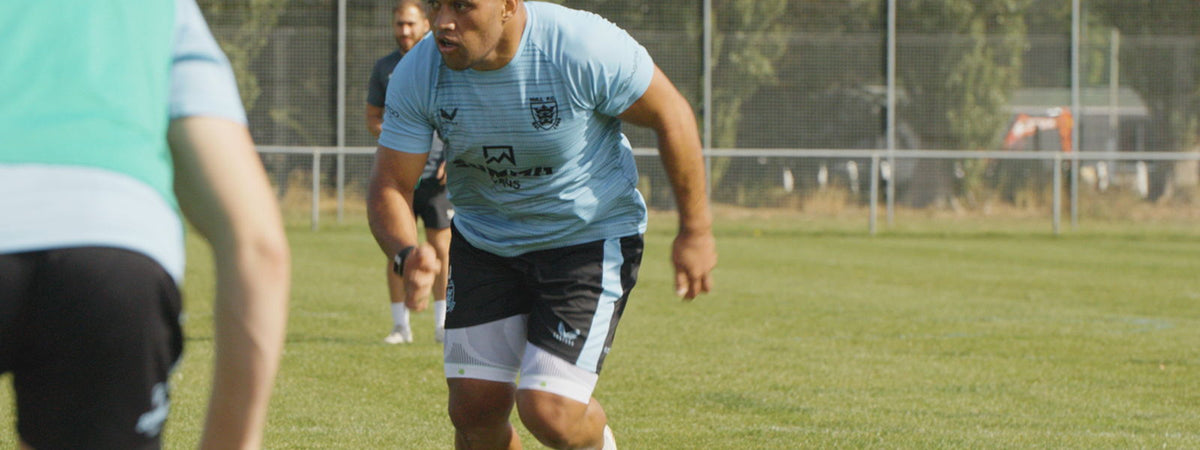
By November the club rugby union season is in full swing, the autumn internationals are on television, and rugby league players are back in pre-season training. For anyone who had an anterior cruciate ligament (ACL) reconstruction last winter or spring, the question stops being hypothetical: am I ready for contact again, and should I wear something on the knee when I go back?
The honest answer is more nuanced than most product pages suggest. Three peer-reviewed papers from one University of Otago trial measured what a knitted knee sleeve does, and does not do, for people with lingering limitations after ACL surgery. Here is what they found and what it means for anyone heading back to a sport with landing, cutting and contact.
What a knee support after ACL reconstruction can and cannot do
The ACL is the ligament inside the knee that stops the shin bone sliding forward and rotating too far under the thigh bone. After reconstruction, the graft restores the mechanical restraint, but many players are left with a knee that feels less reliable than the other side, particularly when landing or changing direction.
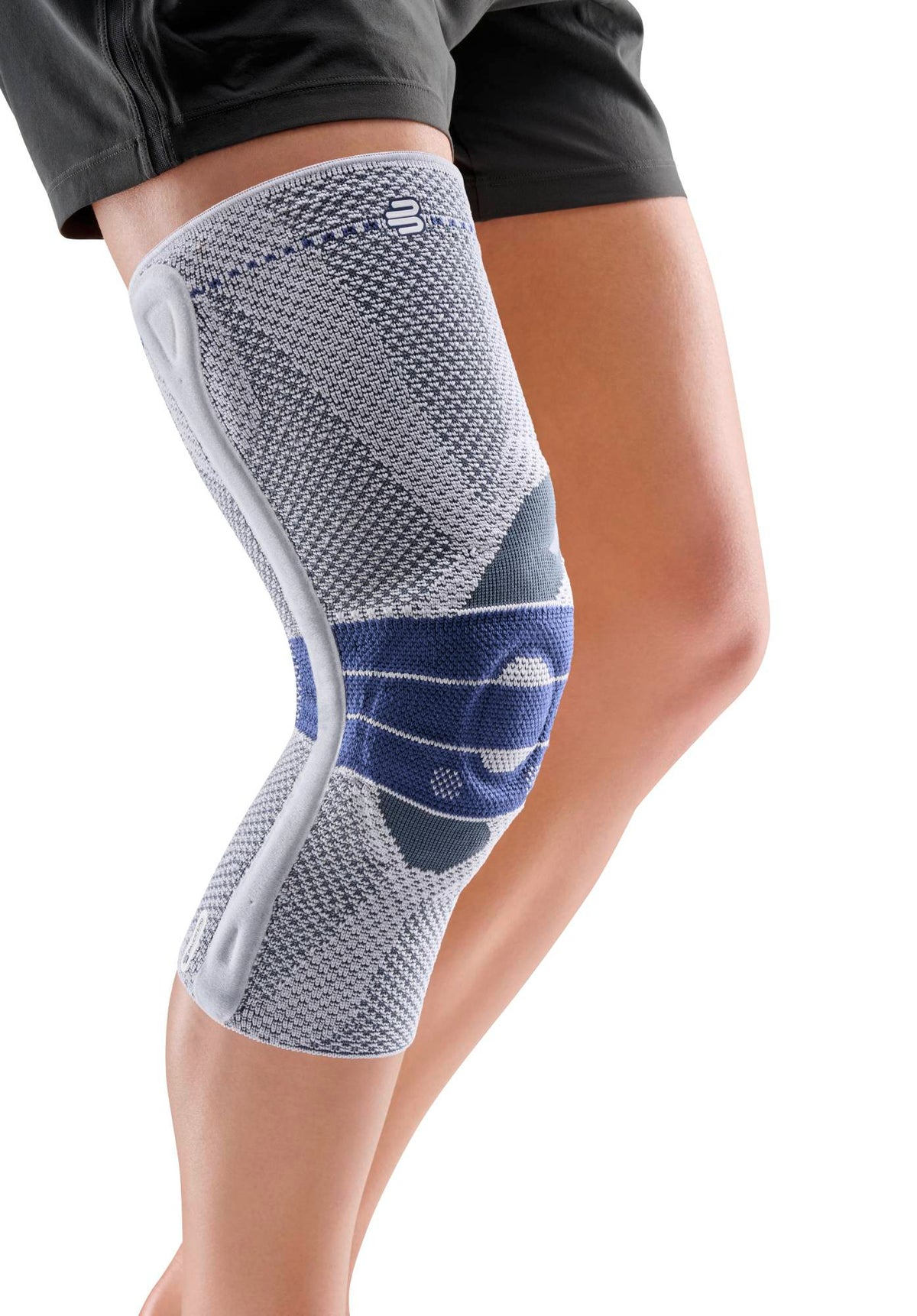
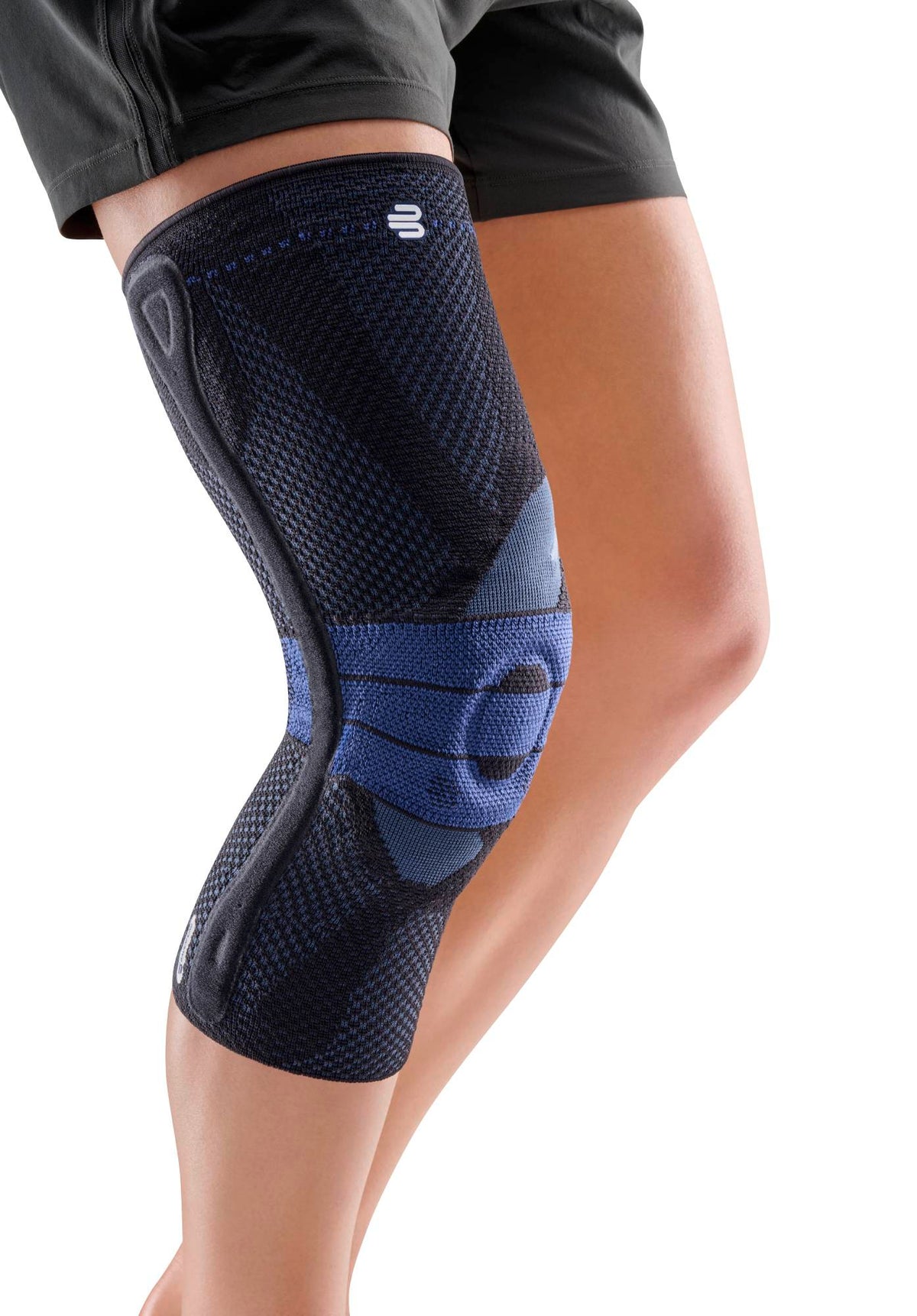
A compression knee support such as the Bauerfeind GenuTrain knee support is a knitted sleeve with a soft gel pad around the kneecap. It has low mechanical stiffness, so it does not brace the knee the way a hinged orthosis does. Every research group that has studied it says any effect is more likely to come through the nervous system than through mechanical restraint.
Proprioception: the knee's sense of where it is
Proprioception is the body's ability to sense a joint's position and movement without looking at it. It relies on receptors in the skin, muscles and the joint, and it is commonly reduced after an ACL injury. The Otago researchers suggest the tactile contact of the sleeve improves awareness of the knee, which may lead to more confidence in the task and a less guarded movement pattern.
A sleeve is not a hinged brace
A sleeve may change how the knee feels and how it is controlled. It does not restrict range of motion or hold the joint against a tackle. A hinged brace recommended by your surgeon or physiotherapist is a different category of product. The studies below tested the sleeve only.
What the research says about GenuTrain after ACL reconstruction
All three papers come from one registered trial at the University of Otago in New Zealand, funded by Bauerfeind AG, which the authors state had no role in data collection, analysis or interpretation. Participants were men and women aged 18 to 40, between 6 months and 5 years past ACL reconstruction, who still reported some functional limitation. The trial had two parts: an immediate comparison with and without the sleeve, and a six-week randomised trial of daily wear against no sleeve.
Study one: hop distance and six-week outcomes, Sole and colleagues, 2021
Published in BMC Musculoskeletal Disorders, this paper reported the main results from 34 participants. Hopping as far as possible on the operated leg, people jumped 3.6% further with the sleeve on, roughly 5 cm. The deficit against the uninjured leg narrowed from 9.3% to 6.0%. The authors note the 3.6% change was only slightly larger than the test's measurement error of 3.0% and well below the 8% minimal detectable difference, so they advise caution.
In the six-week part, 17 people wore the sleeve during rehabilitation, activity and sport for at least an hour a day and 17 did not. Self-reported knee function improved in both groups by similar amounts, and hop distance, quadriceps strength and hamstring strength did not improve more in the sleeve group. The authors' conclusion is direct: a sleeve is likely neither to enhance nor to interfere with recovery over six weeks, and their data do not support routine use of knee sleeves after ACL reconstruction. They recommend prescribing one individually, as an adjunct to rehabilitation, based on how the person responds.
Study two: landing mechanics on a step-down hop, Sole and colleagues, 2022
The second paper analysed 31 participants stepping down from a 30 cm box and hopping forward. Without the sleeve, the operated knee landed straighter than the uninjured side. With it, knee flexion at initial contact increased by 2.7 degrees and peak flexion by 3.0 degrees, bringing the operated leg closer to the uninjured pattern during the first part of landing. A more flexed landing is generally considered desirable, although the change is smaller than the test's 4-degree detectable difference.
After six weeks, in a sub-group of 9 people per arm, the sleeve group completed the hop task 22% faster than at baseline, a change not seen in the control group. Knee angles and moments did not improve more than in the control group, and the authors suggest anyone using a sleeve alongside landing training should also train without it.
Study three: ground reaction forces and knee power, Sole and colleagues, 2022
The third paper, in PLoS ONE, covered 30 participants and asked whether the sleeve changed how hard the leg hit the ground. It did not. What changed was how the knee absorbed the landing in the first few milliseconds: with the sleeve, the operated knee shifted from a brief pushing pattern to an absorbing pattern that matched the uninjured leg, a sign of better control at contact. No participant reported any adverse effect from wearing the sleeve.
Six steps for returning to contact sport after ACL reconstruction
- Get cleared first. Return-to-contact decisions belong to your surgeon and physiotherapist, based on strength, hop and movement testing.
- Keep the rehabilitation going. The six-week trial found function improved with or without a sleeve. Every author group calls the sleeve an adjunct.
- Test how your knee responds. Try the sleeve during landing or agility drills and notice whether the knee feels more controlled, as the Otago researchers recommend.
- Train without it as well. The landing study advises doing some activity without the sleeve so the knee is not reliant on it.
- Match the product to the problem. A sleeve suits a knee that feels unreliable but is mechanically sound. Instability on examination may call for side bars or a hinged brace, which is a clinical decision.
- Build contact gradually. Move from non-contact drills to controlled contact to full training before match play, and report any giving way, locking or swelling.
Which knee support is right for you?
The right choice depends on what your clinician has found, not just on how the knee feels.
- Bauerfeind GenuTrain Knee Support: the knitted compression sleeve with the Omega+ pad around the kneecap. The closest product to the sleeve tested in the Otago trial, for a reconstructed knee that is mechanically stable but feels less reliable.
- Bauerfeind GenuTrain S Knee Support: the same knit and pad with lateral joint bars and an adjustable strap system, designed for slight instability where more passive support is wanted.
- Bauerfeind GenuTrain S Pro Knee Support: adds adjustable hinges and two inelastic straps so the flexion and extension range can be restricted during certain phases of treatment.
- Bauerfeind SofTec Genu: a multifunctional orthosis with rigid aluminium side bars and full range-of-motion control, used for torn or collateral ligament injury when longer-term stabilisation is needed.
Browse the full Knee: Ligament Stability range. For background on the injury, read our guide to the unhappy triad of ACL, MCL and meniscus damage, and see how Bauerfeind supports players through its England Rugby League partnership.
Quick answers
Should I wear a knee support to play rugby after ACL reconstruction?
Only if your surgeon or physiotherapist agrees, and only alongside your rehabilitation. The Otago trial tested hopping and landing in a laboratory, not tackling or cutting on grass, and found immediate changes in hop distance and landing angle but no extra benefit over six weeks. Try it in training first and judge how your knee responds.
Does a knee sleeve speed up ACL recovery?
No evidence in the Otago trial suggests it does. After six weeks of daily wear, self-reported knee function, hop distance and thigh strength improved by similar amounts in the sleeve group and the group without one. The authors concluded a sleeve is likely neither to enhance nor to interfere with recovery over that period.
Will wearing a knee support make my leg weaker?
The six-week trial found no difference in quadriceps or hamstring strength between people who wore the sleeve and those who did not, so it neither strengthened nor weakened the thigh. The researchers still advise doing some training without the sleeve so the knee does not become reliant on it.
What is the difference between a compression knee support and a hinged brace?
A compression support such as GenuTrain is a knitted sleeve with low mechanical stiffness that works mainly through the sense of joint position. A hinged brace such as GenuTrain S Pro or SofTec Genu has side bars that physically limit movement and can restrict flexion and extension. Which you need is a clinical decision based on examination.
Can a knee support prevent another ACL tear?
There is no evidence from these studies that it can. The researchers saw a more flexed, absorbing landing with the sleeve and cautiously speculated this might be relevant to injury risk, but they did not measure re-injury and did not claim a protective effect. Do not rely on any support to protect a reconstructed knee in contact.
This article is for general information only and is not medical advice. If you have persistent pain, swelling, locking, giving way or an injury, speak to a GP or physiotherapist before using a support. Reviewed by the Joint Operations product team.
Sources
- Sole G, Lamb P, Pataky T, Klima S, Navarre P, Hammer N (2021). Immediate and 6-week effects of wearing a knee sleeve following anterior cruciate ligament reconstruction: a cross-over laboratory and randomised clinical trial. BMC Musculoskeletal Disorders 22: 655.
- Sole G, Lamb P, Pataky T, Pathak A, Klima S, Navarre P, Hammer N (2022). Immediate and six-week effects of wearing a knee sleeve following anterior cruciate ligament reconstruction on knee kinematics and kinetics: a cross-over laboratory and randomised clinical trial. BMC Musculoskeletal Disorders 23: 560.
- Sole G, Pataky T, Hammer N, Lamb P (2022). Can a knee sleeve influence ground reaction forces and knee joint power during a step-down hop in participants following anterior cruciate ligament reconstruction? A secondary analysis. PLoS ONE 17(12): e0272677.